
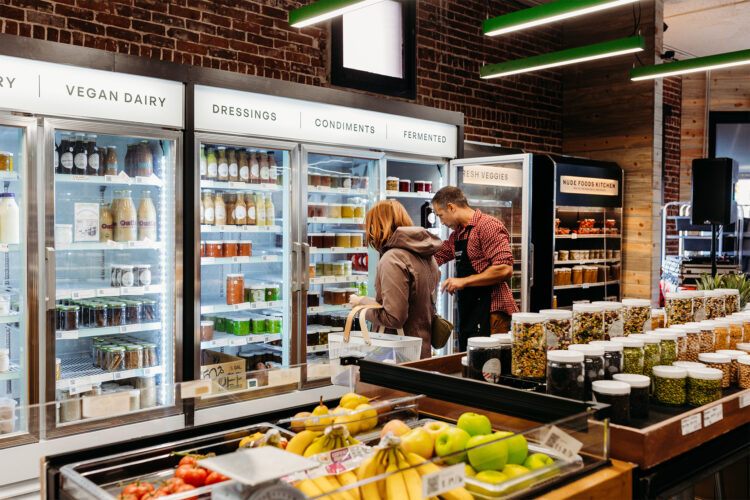
For many shoppers, buying sustainably can feel like a steep balancing act. Plastic-free products often come with higher price tags, extra planning, or a nagging feeling that every purchase carries environmental consequences. Nude Foods Market is working to change that. Not by asking customers to overhaul their lives, but by quietly reimagining the grocery store itself.
Nude Foods Market shelves are lined with pantry staples, fresh foods, and household essentials packaged not in disposable plastic, but in reusable glass jars and returnable containers. Customers shop much as they would at any neighborhood market, then simply return the empty containers to be washed and used again. The system really is that simple.
“We wanted to create a place where people could shop for beautiful, delicious, high-quality food and household essentials without all the waste,” says co-founder Verity Noble. “The better choice should also be the convenient choice.”
That philosophy became the foundation for Nude Foods Market after its founders recognized a disconnect within the grocery industry. Consumers wanted to support healthier, more sustainable food systems, yet even products labeled organic or natural often arrived wrapped in layers of single-use packaging. Instead of placing the responsibility solely on shoppers, the founders asked a different question: What if the grocery store itself made sustainability easier?
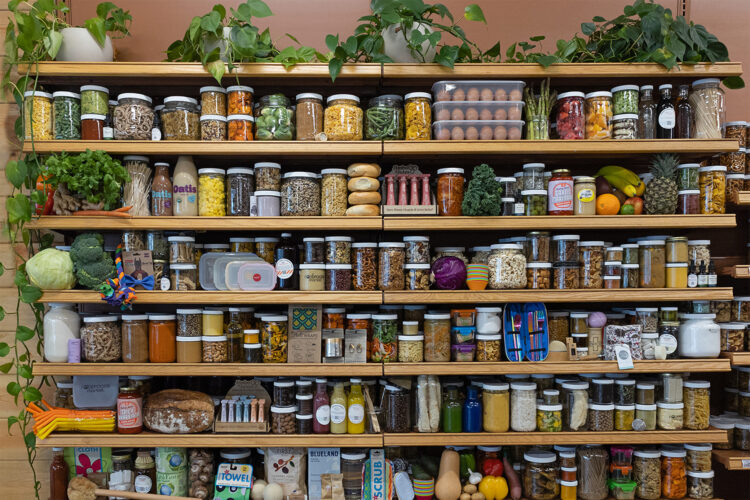
“It’s about making small swaps that add up,” Verity explains. “If someone switches their oats, olive oil, laundry detergent, snacks or takeout containers away from single-use packaging, that matters. We want people to feel empowered, not judged.”
While the reusable containers often capture shoppers’ attention first, they’re only one piece of the market’s philosophy. Behind every product sits an extensive sourcing process that capitalizes on transparency, quality and local partnerships.
Nearly half of Nude Foods’ inventory comes from Colorado producers, strengthening relationships with nearby farmers and makers while reducing transportation impacts. The team also looks beyond ingredients, considering everything from soil health and animal welfare to worker treatment and packaging practices before bringing a product onto the shelves.
“We do all the worrying and research so our customers don’t have to,” Verity says.
Those partnerships have helped transform the market into more than a place to stock the pantry. It has become a showcase for Colorado’s growing network of farmers, artisans and food producers committed to more thoughtful ways of growing and making food.
“Customers often tell us, ‘This is what I’ve been waiting for,'” Verity relays. “‘I’ve felt guilty about grocery waste for years, and this finally makes it easy.'”
Building a low-waste grocery business hasn’t come without challenges. Traditional food distribution relies heavily on disposable packaging and long-established supply chains. Reusable containers require washing, tracking, storage, and close coordination with suppliers, adding layers of complexity that conventional grocery stores rarely encounter.
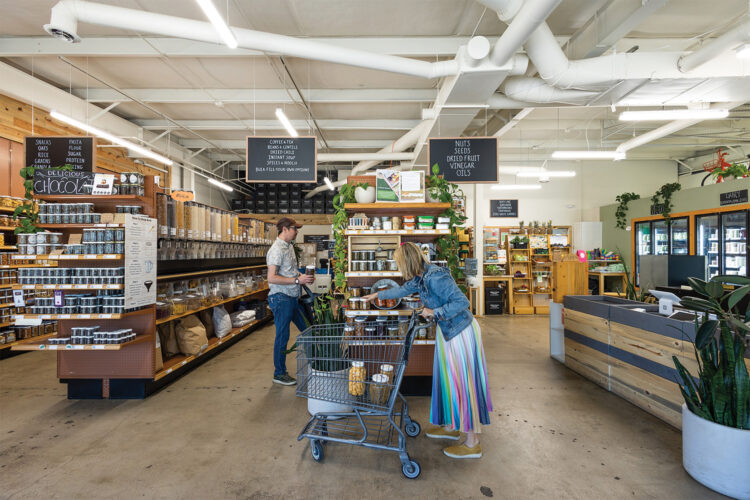
Still, the founders see every returned jar as evidence that another model is possible. “Every jar that comes back and gets reused is a tiny vote for a different future,” Verity states.
That vision has resonated well beyond the checkout line. Community members have invested more than $1 million in the business, a milestone the founders describe as one of the clearest signs that people believe in what they’re building. “We realized this wasn’t just a store people liked,” Verity says. “It was a model people wanted to see succeed.”
And once customers experience a grocery store where reuse feels normal, the founders believe it’s difficult to imagine going back. “The old way starts to look as wasteful and unnecessary as it really is,” Verity describes.
For print-exclusive stories, download the digital magazine or pick up a copy from select local King Soopers, Safeway, Tattered Cover, or Barnes & Noble locations.