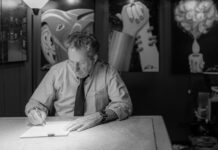
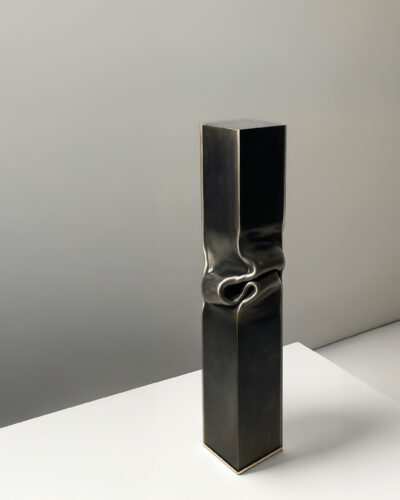
Steel is not supposed to wrinkle. It isn’t supposed to look soft, fluid, or particularly willing to cooperate. Ian Houghton knows this better than most. He also knows that if you get it hot enough and apply enough force, the rules begin to change. “Steel feels cold, rigid, and almost lifeless when you first look at it, but with enough heat and pressure it becomes incredibly fluid,” Ian says. “That transformation still feels a little bit like magic.” He has been chasing that magic for more than 20 years. Ian grew up in Tucson, Arizona, and began working for an artist in his teens. There, he learned to weld and fabricate and got an early education in what it actually takes to make a living as an artist. After graduating from the University of Arizona, he moved to Denver in 2012, initially thinking he’d simply give Colorado a try.
More than a decade later, he’s still here, turning stainless steel, bronze, aluminum, and mild steel into sculptures that challenge what we expect those materials to do. “I like disrupting that expectation,” he says. “When something we associate with strength and rigidity suddenly bends, wrinkles, stretches, or feels soft, it takes on an entirely different personality.”
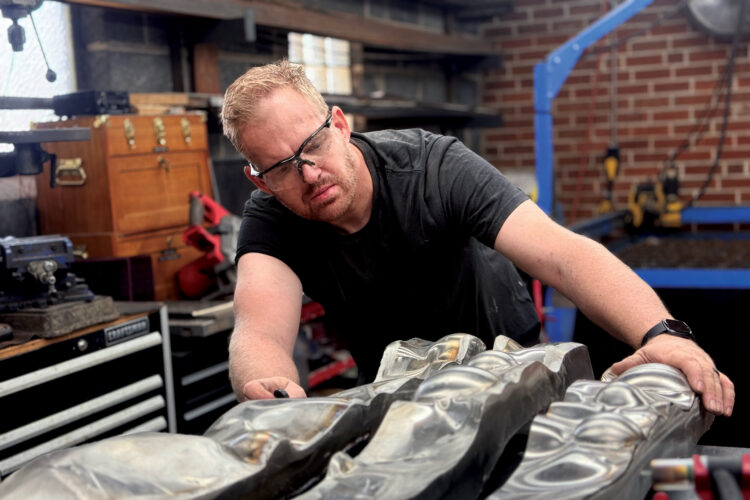
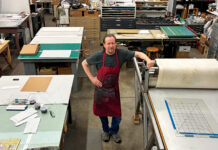
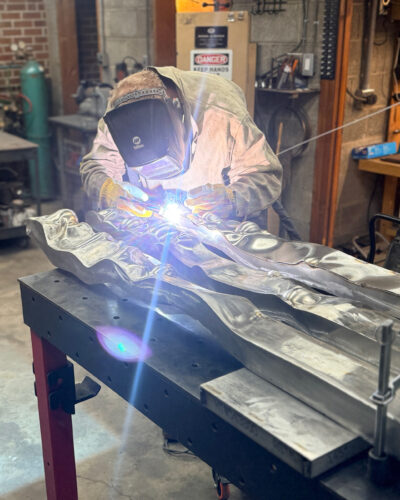
Creating those contradictions requires some serious machinery. Ian once built an 80-ton hydraulic forging press from scrap steel simply because he wanted to manipulate metal in ways his hands couldn’t. He has broken and rebuilt it multiple times, modifying his equipment as his ideas grow more ambitious. Eventually, he built a larger forge, too. “The equipment and the artwork have really evolved together,” he says.
So has his willingness to relinquish control. Ian may begin with an idea, but heat, pressure, timing, and the steel itself determine what happens next. Sometimes an accident becomes the most interesting part. “I might have a picture in my head of what I want, but the steel usually has some opinions of its own.”
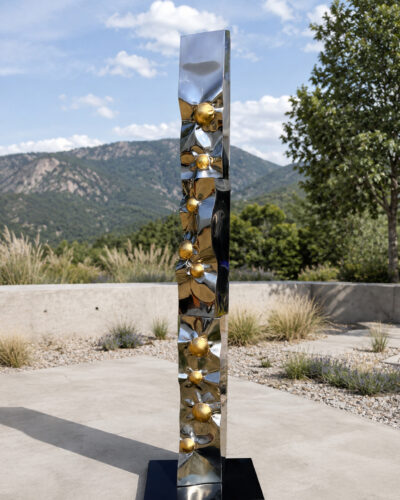
Colorado provides another collaborator. Ian is particularly interested in polished stainless steel, which reflects its surroundings and can shift dramatically as light and weather change. Outdoors, mountains, clouds, trees, and snow become part of the work. “I want the sculpture to complement its surroundings rather than compete with them,” he says. “Ideally, the environment becomes another material in the piece.”
That relationship matters whether a sculpture stands in a private home or a public space. Ian wants viewers to move around his work, encounter it from different angles, and decide for themselves what they see. There is no prescribed interpretation and, ideally, no single best vantage point. “I love the idea that someone might walk past a piece a hundred times and then one day notice something they had never seen before.”
Ian still wants that experience himself. After two decades with metal, the pleasure of a successful piece remains surprisingly simple: Does it make him want to keep looking? “If I still want to walk around it, touch it, study it, and figure it out myself,” he says, “then I know I am getting close.” And if a material he knows so intimately can still surprise him? Even better.
For print-exclusive stories, download the digital magazine or pick up a copy from select local King Soopers, Safeway, Tattered Cover, or Barnes & Noble locations.