
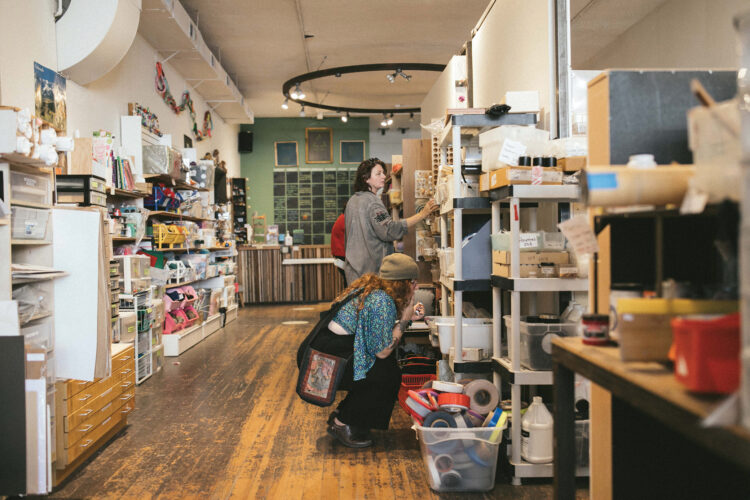
Two summers ago, as asylum-seeking families arrived in Denver, many were reluctant to spend time in public spaces amid fears surrounding immigration enforcement. Staff at ReCreative Denver quietly assembled art supply kits so kids stuck inside for the summer had something to do besides wait. It was a small gesture, but it says something about the nonprofit: When the community needs something, a well-stocked supply of donated paint, paper, and fabric can go surprisingly far.
“I’d like to believe that regardless of our politics, we can all agree that every child deserves opportunities to express themselves creatively,” says Emily Korson, executive director and co-founder of ReCreative.
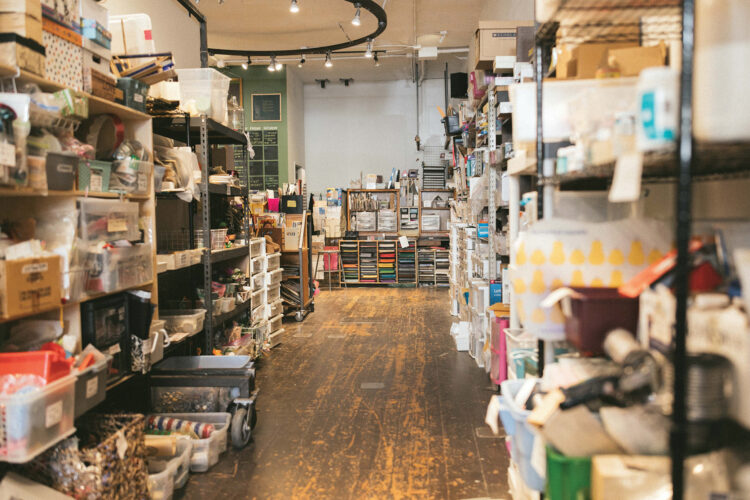
Emily co-founded the nonprofit in 2016 with Chris Scott and Matthew Shaw, building on a similar model she’d launched in Seattle while raising young kids on a resident physician’s salary. The concept is simple: collect art and craft supplies people no longer need, sort them by hand, and resell them at prices meant to keep creativity accessible.
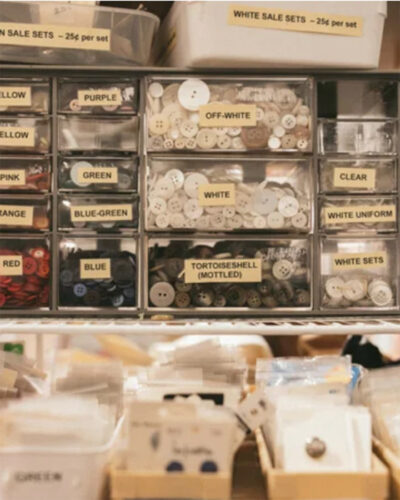
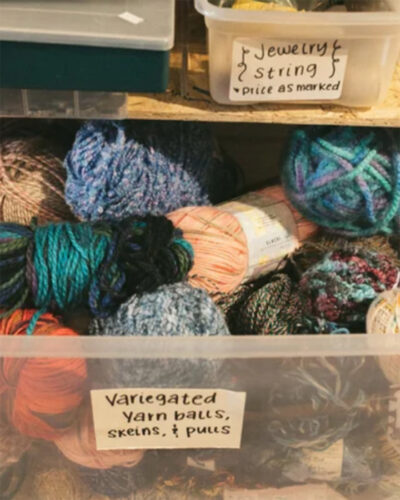
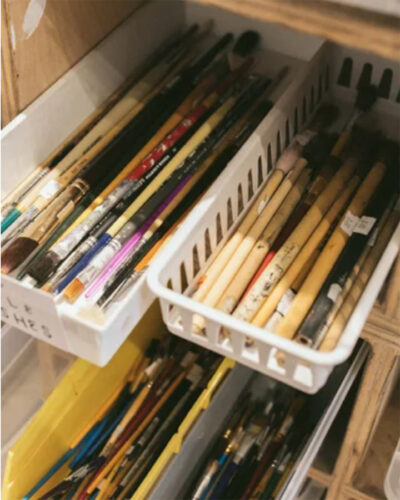
A decade in, the Santa Fe Art District organization has grown into a small campus, with eight artist studios, a member-run woodshop, and the Portal Gallery, which showcases local work during First Friday Art Walks. More than 200 volunteers each year help divert roughly 30,000 pounds of usable materials from landfills, totaling nearly 200,000 pounds since ReCreative opened.
Regulars come for the bargains, but that’s rarely the whole story. “They’re on the hunt for inspiration, or a delightfully weird little piece of the past, but the connection with others is the most meaningful thing they take away,” Emily says.
That sense of discovery is intentional. “Creative reuse isn’t a compromise,” Emily says. “It’s an invitation to explore, experiment, and rethink what waste really means.”
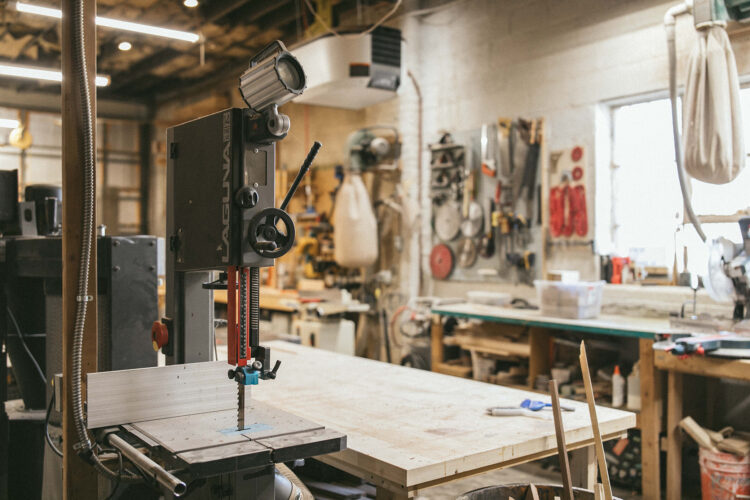
The space itself is catching up to that ambition. ReVision 2026, launched as ReCreative approaches its 10-year milestone, will add a dedicated classroom so workshops no longer compete with retail hours, overhaul the donation-sorting process, and make the retail floor more accessible. “This is the perfect time to invest in the next decade of creative reuse, sustainability, and community programming,” Emily says.
The $75,000 project is already about 60 percent funded, thanks to a Colorado Circular Communities grant and support from the Bonfils-Stanton Foundation. “Every donation directly supports our mission,” Emily emphasizes. “It helps ensure ReCreative can grow, innovate, and serve the community for years to come.”
Denverites can support the nonprofit online, by dropping off a donation by appointment, or simply shop the store. ReCreative marks its 10th anniversary on December 5 with a day of holiday crafting, closing out a decade spent turning other people’s leftovers into someone else’s dream project.
5 Rules for Donating Used Art Supplies
ReCreative Denver turns secondhand paint, fabric, and craft supplies into affordable materials for local artists, teachers, and families. But donating isn’t quite as simple as showing up with a box. Emily Korson, executive director and co-founder of the nonprofit, shared her top tips for making sure your donation actually helps.
1. Book an appointment first. Donations are by appointment only; no walk-ins. Email donate@recreativedenver.org before you load the car. This guarantees someone’s on hand to help you unload and keeps you from hauling a box back home.
2. Donate what you would use. A simple test is to ask whether you would use the item in your own project. If it’s clean, safe, and still does its job, it’s probably a keeper for someone else. Dried-out paint, moldy fabric, and rusted blades belong in the trash, not the donation pile.
3. Sort before you show up. A little prep at home turns into hours saved for the team and means your materials reach a new artist faster. Fold and stack fabric, keep paper flat, secure yarn, bundle tools, and place beads, buttons, and other small pieces in bags or boxes. Similar materials should always be grouped together.
4. Know the no list. Clothing and fabric scraps under a yard won’t work, and neither will household goods like kitchenware, electronics, or anything that’s been stored with mothballs. Got a bulk load? Email photos ahead of time so staff can plan for it.
5. Don’t underestimate the “weird” stuff. Old maps, sheet music, jewelry findings, printmaking tools, and classroom leftovers are exactly the kind of unexpected finds that spark new projects. Fabric by the yard, canvas, watercolor paper, and yarn are always in high demand and rarely last long on the shelves.
For print-exclusive stories, download the digital magazine or pick up a copy from select local King Soopers, Safeway, Tattered Cover, or Barnes & Noble locations.