From gardens to green spaces to classrooms, three Denver nonprofits are fostering connection and opportunity across the city.
Grow Local Colorado
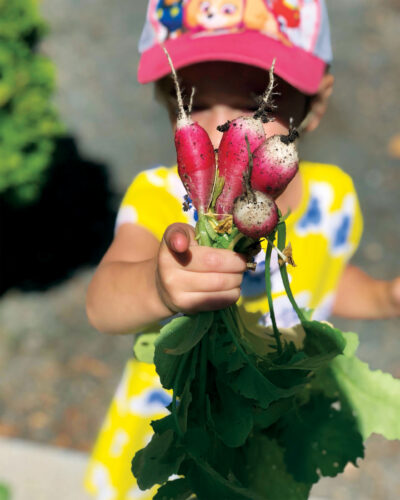
At Grow Local Colorado, the work starts in the soil but extends far beyond it. What began in 2009 as one garden at Civic Center Park has grown into a network of sites throughout Denver, all rooted in a simple but powerful idea: food can connect us.
“Gardens were the obvious choice as a place for people to heal through access to nutritious food, connect with each other, smell the soil, and learn to care for our world,” Linda Kiker, co-director of Grow Local Colorado, explains. Today, that mission has expanded to include fruit gleaning (collecting excess fruit from farms or orchards to prevent food waste), seed sharing, and partnerships that stretch across the city’s food system. Volunteers harvest over 10,000 pounds of fruit annually (food that might otherwise go to waste) and distribute it through other organizations. “We looked at one simple act of including another partner, and it started a big apple rolling.”
Whether through small, everyday acts or something larger, service has a way of rippling outward, strengthening communities. At Grow Local Colorado, people often leave with more than they expected, carrying with them not just fresh food but a renewed sense of belonging and purpose. New connections serve as a reminder that when we care for one another, we all thrive.
The Park People
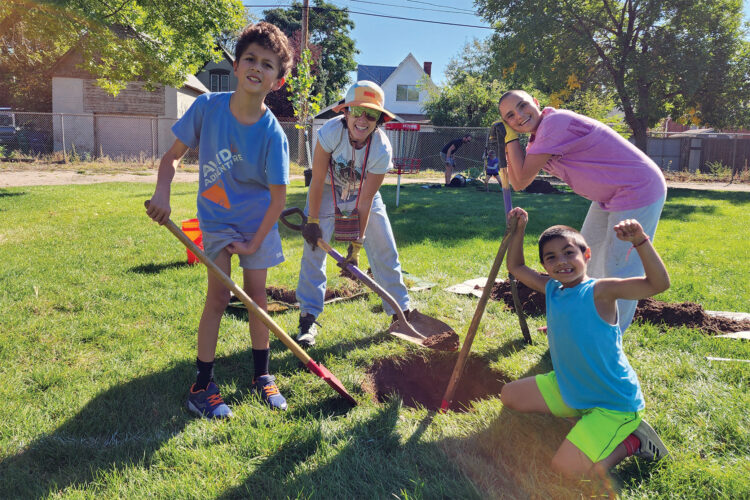
For more than five decades, The Park People has helped shape the green spaces that define life in Denver. What began in 1969 as a small group of residents raising funds for the care of local parks has grown into a citywide effort to expand and care for Denver’s urban forest. Their first initiative, Denver Digs Trees, started with just 50 trees in one neighborhood. Today, that number has surpassed 70,000. “While the core of our mission has remained the same, we have expanded to a robust set of urban forestry programs that engage all of our Denver communities,” Mackenzie Sanders, communications manager of The Park People, explains.
That impact is felt in both environmental gains and personal ways. During their 2026 distribution, 1,200 trees were planted, many in neighborhoods that need them most, helping to cool homes, clean the air, and manage stormwater. “I received free trees for my yard in 2025 and 2026,” says Colleen Wallace, a resident of a low-canopy neighborhood. “I’m so grateful a program like this exists. It’s invaluable, especially for communities with fewer resources.”
At its core, the work is about connection. “Our entire mission revolves around the people we serve and work alongside,” Mackenzie adds.
Think 360 Arts for Learning
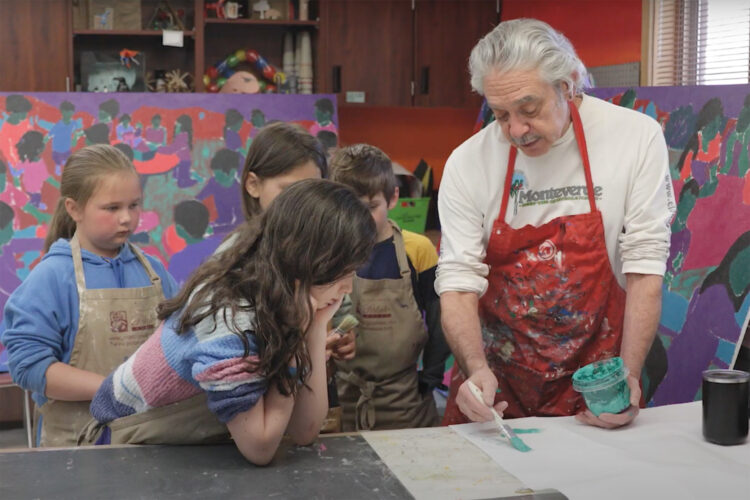
For more than six decades, Think 360 Arts for Learning has championed the belief that arts belong to everyone. Founded in 1963, the organization has grown from a local initiative into a statewide network bringing creative learning to schools, libraries, and community spaces. “Every child deserves access to the arts,” Adam Kullberg, executive director of Think 360 Arts for Learning, states. “What’s changed is the scale and scope of our work.”
That work shows up in ways both imaginative and practical. In classrooms, it might mean kindergarteners writing and performing their own songs, or students using movement and storytelling to better understand math and science. “People often talk about the arts as ‘extra,’ but we see them as foundational,” Adam reveals. “The arts help build confidence, creativity, collaboration, and problem-solving—skills our communities need now more than ever.”
The impact can be transformative. During a recent residency inspired by the book, Where the Wild Things Are, students who began the program hesitant to speak grew into self-assured performers, while teachers gained tools they could carry forward. “That’s one of the most powerful parts of our work,” Adam reflects. “The impact remains long after a program ends.”
For print-exclusive stories, download the digital magazine or pick up a copy from select local King Soopers, Safeway, Tattered Cover, or Barnes & Noble locations.