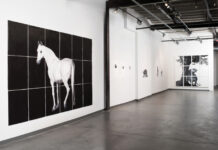
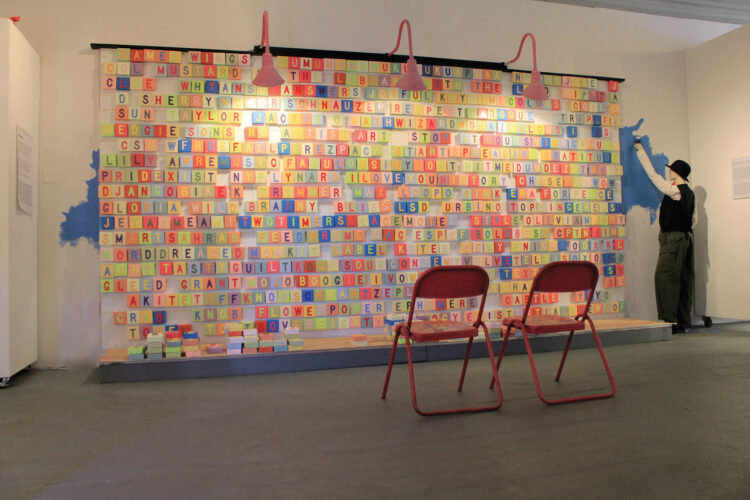
Laura Phelps Rogers has never had much use for staying in one lane. The Denver-born artist works across sculpture, installation, photography, performance, public art, and community projects, shifting mediums as readily as she shifts scale. A piece might fit in your hand or stretch hundreds of feet. For Laura, that’s simply part of the job. “Sculpture in itself is a problem-solving discipline,” she says.
Her path there wasn’t entirely linear. Laura finished her bachelor’s degree as an adult, beginning with one pursuit and emerging with a BFA in sculpture focused on metal casting. The medium suited her, but an early residency spent creating only with found and ephemeral materials changed her thinking. “It was freeing and empowering at the same time,” she says. “Material is part of the language of the outcome.”
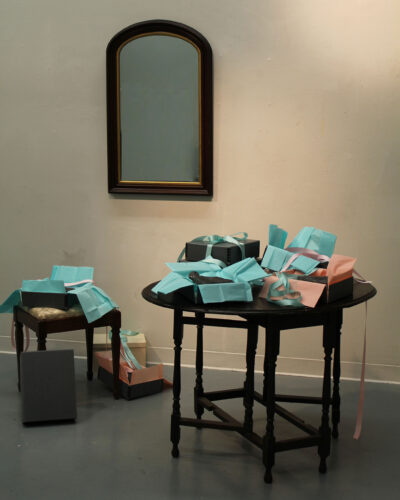
That language has become remarkably expansive. Laura’s work frequently explores women’s experiences, gender, memory, domesticity, and the expectations we inherit, interests rooted partly in the women of her own family. She remembers especially her paternal grandmother, a one-room schoolteacher and one of six children from homesteading agricultural roots, whose resilience left an impression.
Laura describes gender through another inherited object: a suitcase. From the moment a baby is wrapped in pink or blue, she says, that suitcase arrives already packed with expectations “that are defined and difficult to shed.”
Her ongoing 100 Iron Maidens project, which has now surpassed its titular 100, makes the idea tangible. Cast iron speaks to durability and strength, while many of the forms take on traditionally feminine appearances. The works are simultaneously alike and individual, much like the women they represent.
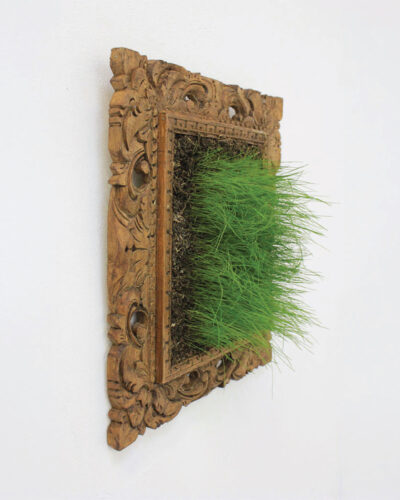
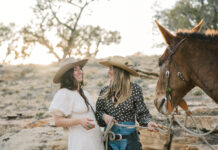
Colorado history runs through Laura’s practice, too. Her family has deep ties to agriculture and the West; her mother even rode her horse to Denver’s East High School in the 1940s. Yet Laura isn’t interested in simply preserving familiar Western mythology. She looks instead at disappearing open space and tells its stories through a less traditional lens. Her contemporary perspective, she jokes, may be “a new form of trail blazing.”
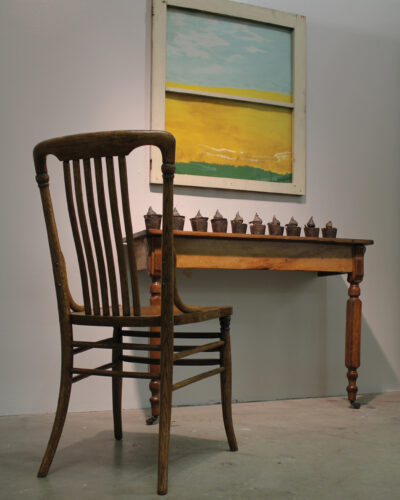
And she has plenty of trail left. Recent work includes a massive installation at the University of Colorado Anschutz’s Center for Bioethics and Humanities inspired by Henrietta Lacks, sculptural quilts, bronze petri dishes, public works, and large-scale paintings.
Ask what still makes her curious and the answer, essentially, is everything. “So far, no shortage of ideas,” she says. For an artist who considers scale somewhat irrelevant, that may be the one thing she has no interest in keeping small.
For print-exclusive stories, download the digital magazine or pick up a copy from select local King Soopers, Safeway, Tattered Cover, or Barnes & Noble locations.