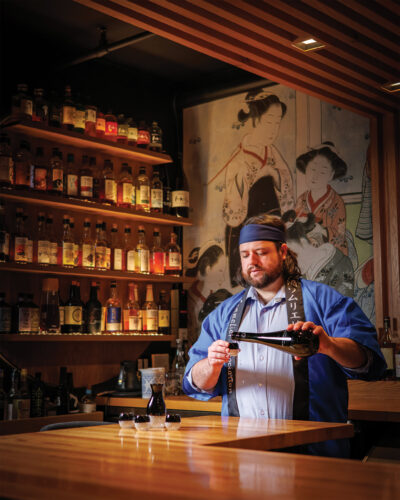
Adam Boggeri didn’t stumble into sake. He circled it from every direction. “My path into sake was a perfect storm,” he says. Raised in a food-obsessed Italian household between Napa Valley and San Francisco, he grew up fluent in wine while quietly absorbing the Japanese culture nearby. During the pandemic, curiosity turned hands-on when he began brewing sake at home, setting off a deeper pursuit that eventually pulled him out of tech and into full-time sake education. Now based in Colorado, Adam is one of a small handful of certified master sake sommeliers in the U.S., consulting for brands, guest-somm’ing at top restaurants like Sushi by Scratch, and building SakeVerse, an online school designed to make sake make sense. We sat down with him to learn about the often underrated rice wine.
What makes something qualify as sake? “ At its core, sake is a fermented beverage made from just four to five ingredients: rice, water, yeast, kōji mold, and sometimes a small amount of neutral brewer’s alcohol. Traditional sake contains no added flavors. The caveat is that outside of Japan, the term ‘sake’ is largely unregulated. Unlike Champagne, which has strict legal definitions, sake is often broadly classified as any fermented grain beverage.”
How is being a sake somm different from a wine somm? “First, sake is defined more by process and less by ingredients. Unlike wine, which emphasizes grape and terroir, sake’s character comes from production techniques. The second difference is the audience. Wine is a familiar category for most people, so it’s more about narrowing down choices. Many people are still discovering sake, so my role is more about helping them taste broadly and understand the differences.”
What about pairing it with food? “Sake is surprisingly approachable for food pairing because its flavor profiles are the same as those found in everyday meals: grain, lactic, umami, and subtle fruit. Junmai (savory, umami-rich, robust) pairs well with fried foods, rich meats, and savory flavors, while Ginjo and Daiginjo (lighter, aromatic, fruity) shine with seafood, sushi, and lighter fare.”
Hot vs. cold? “Chilled sake emphasizes fruity and floral notes, while gentle warmth brings out richness, umami, and body. While many people associate hot sake with cheap house pours, many high-quality sakes actually become more expressive when gently warmed. In Japan, sake serving temperature is often seasonal, with cooler sake in the summer and warmer sake in the winter.”
What’s polite? “There’s one core etiquette rule that carries over from Japan: you never pour your own glass. This comes from a broader cultural emphasis on maintaining awareness of the group. Because you can’t pour for yourself, sake is traditionally served in small cups, and everyone becomes responsible for watching each other’s glasses.”
For print-exclusive stories, download the digital magazine or pick up a copy from select local King Soopers, Safeway, Tattered Cover, or Barnes & Noble locations.