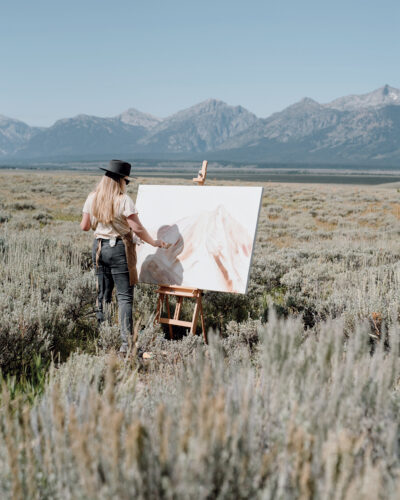
Aspen-based artist Kelly Peters captures the spirit of the American West through contemporary landscape paintings that translate the light, movement, and emotion of the mountains onto canvas. Her work, inspired by landscapes across the West and shaped by classical techniques studied in Italy, blends layered acrylic and oil paints to evoke place and atmosphere. We sat down with the artist to talk about her path to Colorado, the techniques behind her work, and the landscapes that continue to shape her creative vision.
What keeps you in Colorado? The Roaring Fork Valley is a vortex. You come for a winter, and you just don’t leave. There’s something about this place that keeps pulling you back—the light, the people, the mountains. I came thinking I’d ski for a season and go. That was years ago.
When did landscape become central to your work? Honestly, it always has been. I grew up outside Detroit, not exactly mountain country, but I was painting hills and landscapes as a little girl. I don’t know where it came from. It was just always the thing I kept returning to. The West is the fullest expression of that.
How did you develop your layered technique? Through a lot of experimentation. I spent time in Italy studying Renaissance painting techniques—the way those painters built up layers, mixed their own pigments, and worked with such intention. I came back obsessed. I started breaking those methods apart, making my own paint, and testing combinations that had no business working together. Eventually, I landed on this approach of loose acrylic washes underneath and oil on top. It took years to find, and I’m honestly still refining it.
What keeps pulling you back to the West? The scale, the openness, the way weather moves through a canyon or across a ridge. It’s dramatic in a way that demands your attention, but it’s also deeply quiet. That tension is what I’m always chasing.
Does Colorado change how people connect with landscape art? I think great landscape art connects with anyone because everyone has had a moment in nature that stopped them. It doesn’t have to be a mountain summit. It could be a sunset over a parking lot. There’s something universal in that feeling of being small in front of something beautiful. What Colorado does is put you in those moments constantly, so maybe people here are just a little more practiced at recognizing it when they see it in a painting.
How do different settings change your approach? The work itself doesn’t change, but the intention behind it does. A mural or live painting is about energy. People are watching, it’s happening in real time, and there’s a shared experience in the room that becomes part of the piece. When something goes into someone’s home, it has to live with them. It has to be quieter and more personal—something they can sit with for years and still feel something.
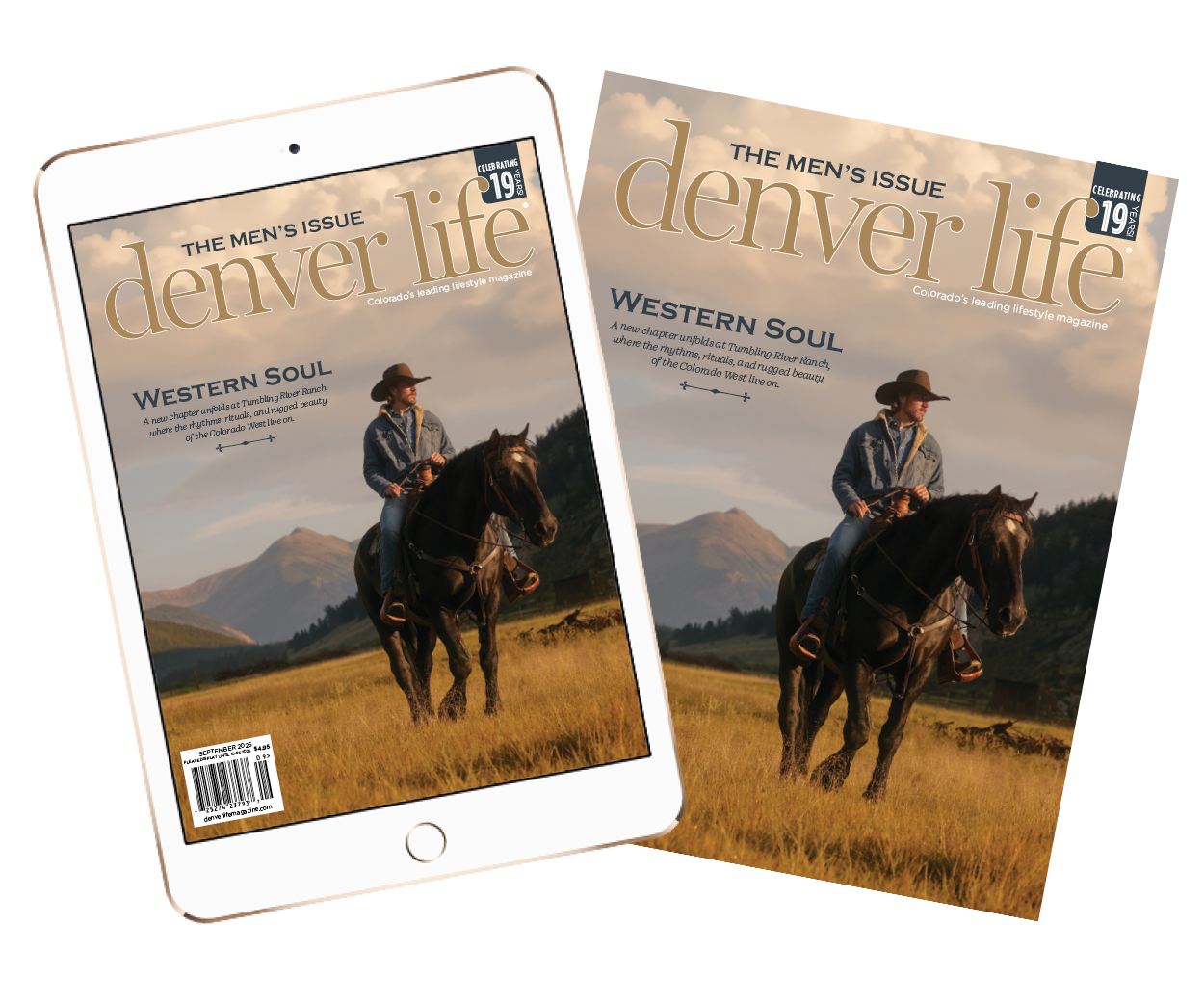
For print-exclusive stories, download the digital magazine or pick up a copy from select local King Soopers, Safeway, Tattered Cover, or Barnes & Noble locations.