The origin story of Dry Land Distillers begins, as many good Colorado stories do, in a garage. In 2017, founder and president Nels Wroe was leaning over a workbench trying to assemble a five-gallon copper still he’d received as a gift. He had never bent or brazed copper before, but he was about to learn. Soon he was spending weekends running experimental batches, bringing samples into the house, and explaining the process to his kids.
Then his son asked a simple question: when were they going to build a bigger one? “That’s the moment it hit me,” Nels says. “Yeah, we’re gonna do this.” His family, apparently, had already arrived at the same conclusion. “They rolled their eyes and said, ‘Yeah dad, we know.’” Today, that backyard curiosity has evolved into Dry Land Distillers, a Longmont-based operation devoted to bottling the flavors of Colorado. For Nels, that meant looking past the picture-perfect versions of the state and into its tougher, quieter landscapes.
“It’s easy to get trapped in the stereotypical image of Colorado— cowboys, mountains, skiing,” he says. “But some of the most striking landscapes are the open plains or the scrub oak and juniper forests that don’t show up on postcards.”
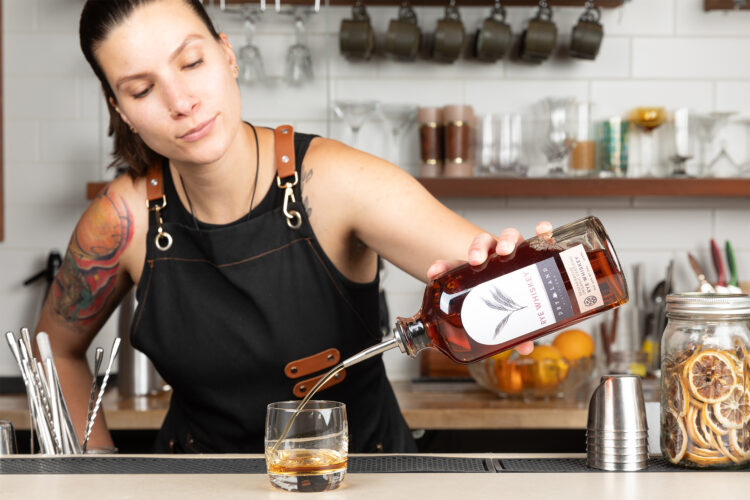
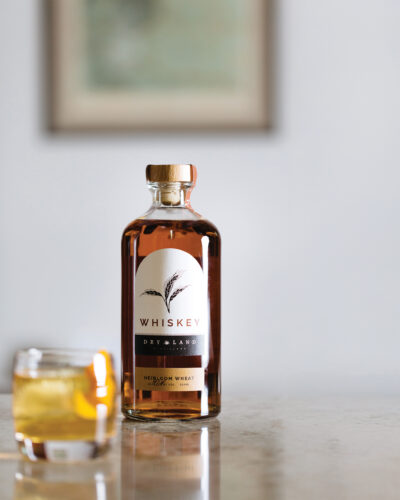
Those overlooked places shape the spirits themselves. Instead of chasing conventional distilling ingredients, Nels built his recipes around what the land naturally offers: heirloom Antero wheat that survives the dry San Luis Valley, prickly pear cactus smoked over mesquite, and botanicals like spruce and juniper. “It’s not so much that I decided to work with these finicky ingredients,” he says. “It’s what the land decided.”
That philosophy extends to the people behind the crops. Dry Land works directly with Colorado farmers and maltsters, sometimes convincing them to revive grains that had nearly disappeared. “Distilling is agriculture,” Nels says. “The whiskey you’re sipping starts with a seed and a prayer in the parched San Luis Valley.”
Even the equipment reflects the same hands-on ethos. Early still designs were sketched “thoughtfully on a napkin,” then fabricated nearby in Broomfield. Nels jokingly describes his role as “chief problem solver,” constantly adapting to crop years, soil conditions, and Colorado’s famously unpredictable weather.
And sustainability isn’t just marketing language. From closed-loop energy systems to composted grain, Dry Land treats environmental responsibility as inseparable from flavor.
“It’s easy to make whiskey,” Nels says. “It’s a lot harder to craft something delicious that also has a positive impact on everyone who helped bring it to your glass.” The scale may have changed since those first garage experiments, but the idea hasn’t: start with what the land gives you and see what happens.
For print-exclusive stories, download the digital magazine or pick up a copy from select local King Soopers, Safeway, Tattered Cover, or Barnes & Noble locations.