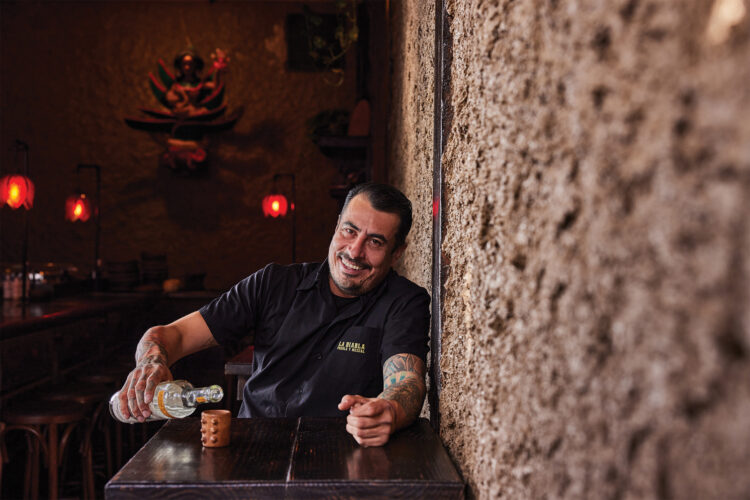
Chef José Avila grew up in the chaos and charm of Mexico City’s taco stands, learning early on what it means to feed and delight. His rise in Denver began in a modest Cherry Creek burrito shop, but ambition quickly took over. After sharpening his fine-dining chops as executive chef at Elway’s, he took that high-end skill set and let it loose on the street-food concepts closest to his heart: Machete Tequila & Tacos and La Diabla Pozole y Mezcal. Today, a slate of new concepts proves he’s just getting started. We caught up with him at his latest venture, Malinche Audiobar, on Platte Street to learn more. Here’s what he had to share.
Permits vs. pozole: “Where I come from, starting a place meant raising the garage door and putting a sign out. I had no idea what I was in for when I started opening restaurants in Denver.”
Measuring success: “Michelin and James Beard awards are part of the game, but not my goal. The recognition definitely helps the business and makes us pause for a minute to realize that we aren’t doing so bad. But for me, the best compliment I get as a chef is when someone has an emotional reaction to my food. They tell me it touched them; it tasted like their grandmother’s. That’s why I do it.”
Two worlds, one plate: “The audiobar concept, like any of my other concepts, came out of curiosity. I wanted to combine Mexican and Japanese cultures and cuisines, but without falling into that dreaded ‘fusion’ category. We are more of a bridge. Just like the story behind the Indigenous woman Malinche, who was once thought to be a traitor to Mexico, but today is seen as a connector of the Mexican and Spanish people. So on the menu, you will see a mix of Niximalization, koji, miso, and mole.”
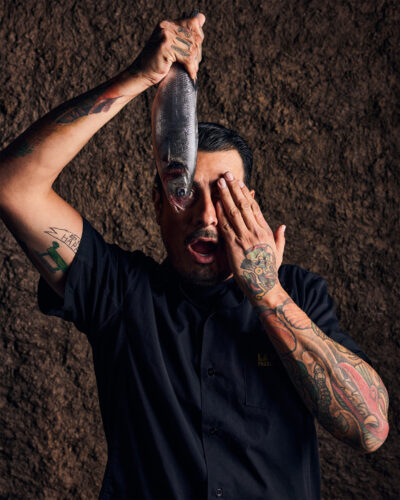
“Music, like food, is a secret language that everyone understands. It puts everyone on equal ground.” – chef José Avila
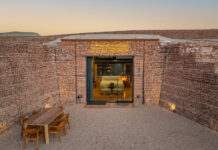
Built, not bought: “I designed the Malinche Audiobar. I just started throwing mud against the walls and finding old carpets in thrift stores to refit into ceiling tiles. About 95 percent of everything here is handmade, which sounds like a designer’s pitch, but it’s actually more of a poverty idea than a posh one.”
Measured approach: “We aren’t trying to show off with high shelves of excessive mezcal bottles; we have four. But the four we have are so special. Less is more. We are going to open the taco truck out front, which I brought from Mexico City, and start operating as a coffee shop during the day.”
Mentoring moments: “My upcoming food hall is meant to be a space to give back, to give a new generation of chefs a platform to operate, get experience and exposure. They will all be incubators because I opened La Diabla by myself and don’t recommend anyone else go at it alone. I’ve got some exciting projects in the works, but first they have to pass all the permits, so they are about a year out still.”
For print-exclusive stories, download the digital magazine or pick up a copy from select local King Soopers, Safeway, Tattered Cover, or Barnes & Noble locations.