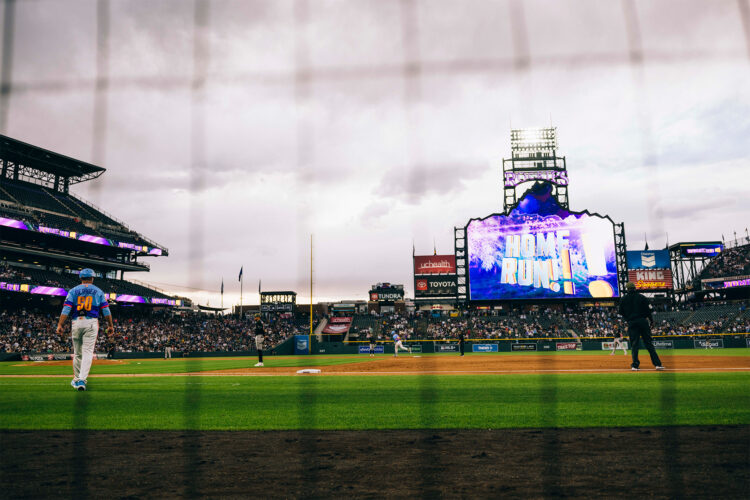
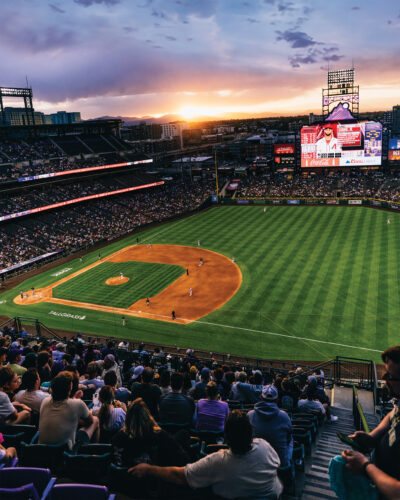
At every Rockies game, there’s a cast of characters creating one of Denver’s most iconic warm-weather traditions. Step behind the gates to see what it takes to power summer at Coors Field.
Meet Mark Razum
Coors Field’s Keeper of the Diamond
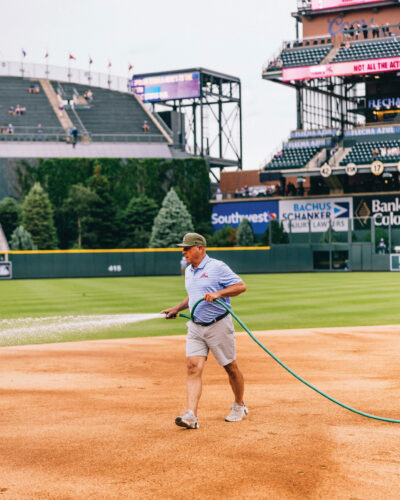
Mark Razum, or Raz as he’s known around the ballpark, woke up around 5 a.m. this morning. Not for a flight, not for a meeting. To meditate. He’ll tell you it’s a skill, same as everything else he’s mastered in 32 years creating and keeping one of baseball’s most storied fields alive. “There are good days and bad days,” he says with an easy laugh. “Don’t get me wrong, I’m not perfect. But that’s part of it.”
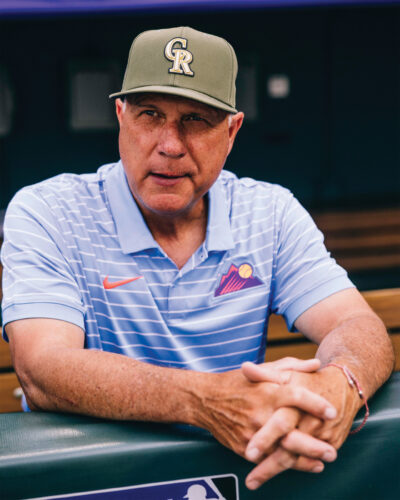
That kind of measured, philosophical calm makes a lot of sense once you understand what Raz actually does for a living. As head groundskeeper at Coors Field since the stadium’s first season in 1995, he came aboard the year prior before there were even seats, and Raz is essentially the silent architect of every game played on that field. The players get the headlines. He gets the grass right.
It started, as great careers often do, sideways. Growing up in Cleveland, his high school hockey coach happened to be the son of the head groundskeeper at Cleveland Stadium. One summer job request later, Raz was hooked. “I always loved being at the stadium,” he says. “Because I always loved playing baseball.” School, he admits with zero apology, wasn’t really his thing. The field was. From there it was spring training in Arizona with the California Angels, a decade with the Oakland A’s, and then Denver, where he’s been ever since.
“We get here about 9 in the morning and start mowing… we go through a series of waterings and nail dragging to create that smooth surface. After the third inning, we manicure the field, drag it out smooth, change the bases—then do it again in the sixth. After that, we repair the field and patch the holes the pitchers make on the mound. We have to ensure it’s put back perfect for the next day.”-Mark Razum
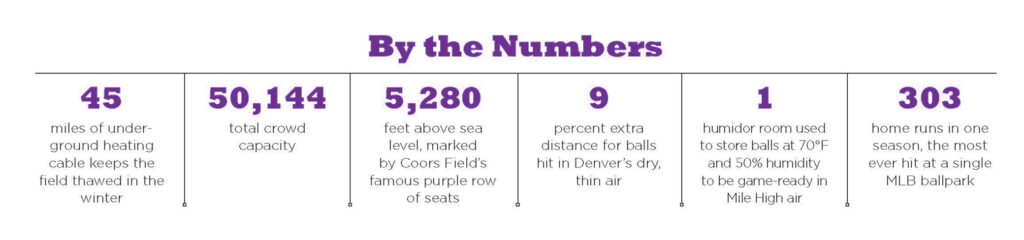
What most fans never think about is the engineering underneath their feet. Coors Field has 45 miles of pipe snaking beneath the grass in a hydronic heating system, hot water circulating through four separate zones, that slowly thaws a field frozen solid through January. “This will be like a frozen brick in January,” Raz says, matter-of-factly. By February, he’s waking it up, a unique process that is taken on for many reasons, one of which being how unique our high-altitude stadium is.
On game day, his crew arrives at nine in the morning for a night game. They mow, grade the warning track, water to prevent dust, and nail-drag the infield dirt into something smooth enough for a major leaguer to trust with his livelihood. The work never fully stops: field manicures after the third inning, again after the sixth, then full post-game repairs to the pitcher’s mound built back to MLB specifications.
And yes, there’s a home-field advantage that goes well beyond altitude. Raz laughs, recounting the time Todd Helton (a beloved first baseman who played his entire 17-year Major League Baseball career for the Colorado Rockies), back problems in full force, quietly asked him to keep the infield as wet as possible. The squishy grass was easier on his aching joints. Raz obliged. Then a rival first baseman stepped out, looked down at the mud, and started hollering for a shovel and a bucket. “I’m hearing everything he’s saying,” Raz says. “And I went out there with a rake. And he goes, ‘This is too wet.’ I’m like, this is how Todd Helton wants it.” The player went back to his position. Todd got his wet dirt. Case closed.
That’s Raz in one story: knowledgeable, unflappable, and completely, quietly in control of something everyone takes for granted until they don’t.
Food of the Field
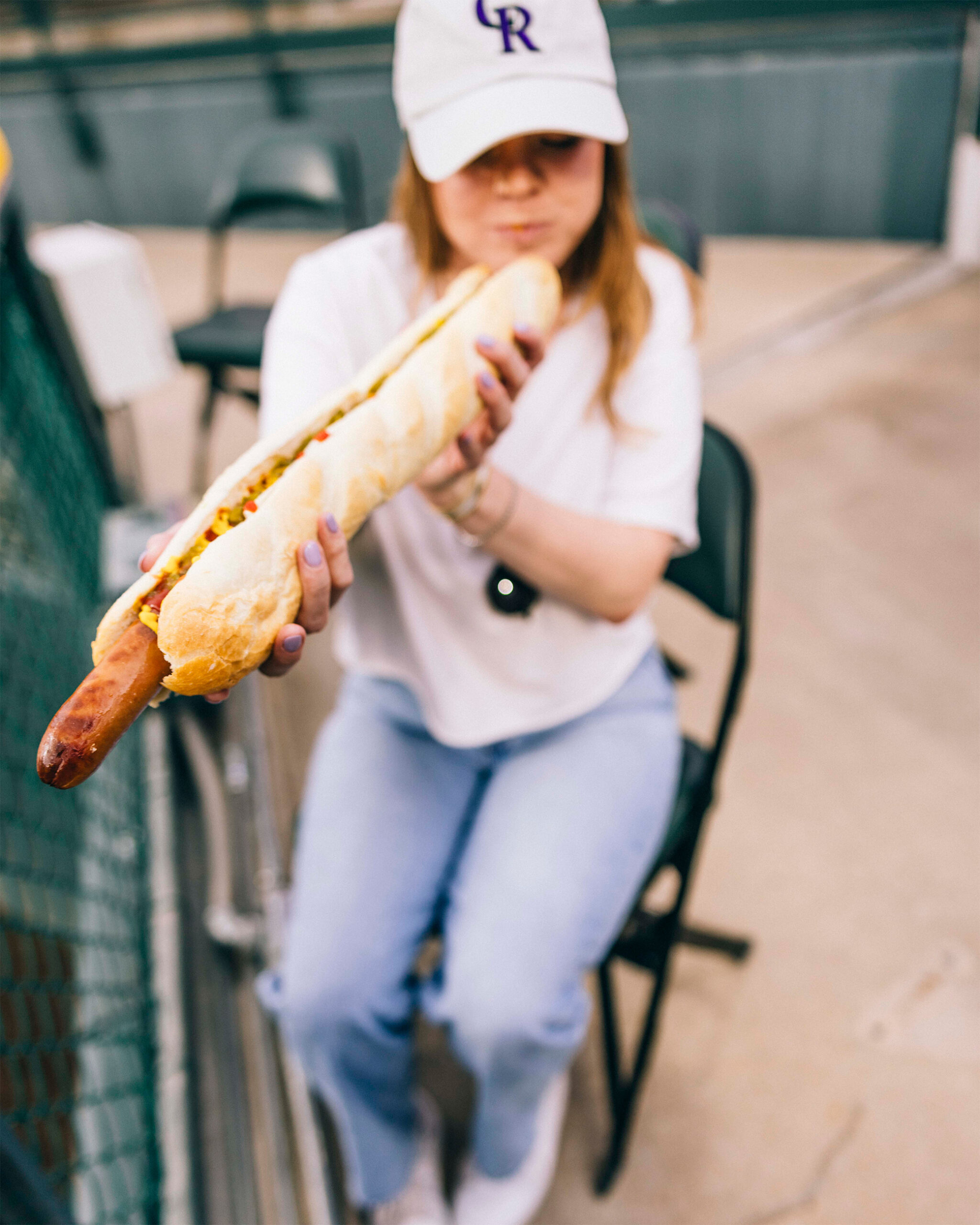
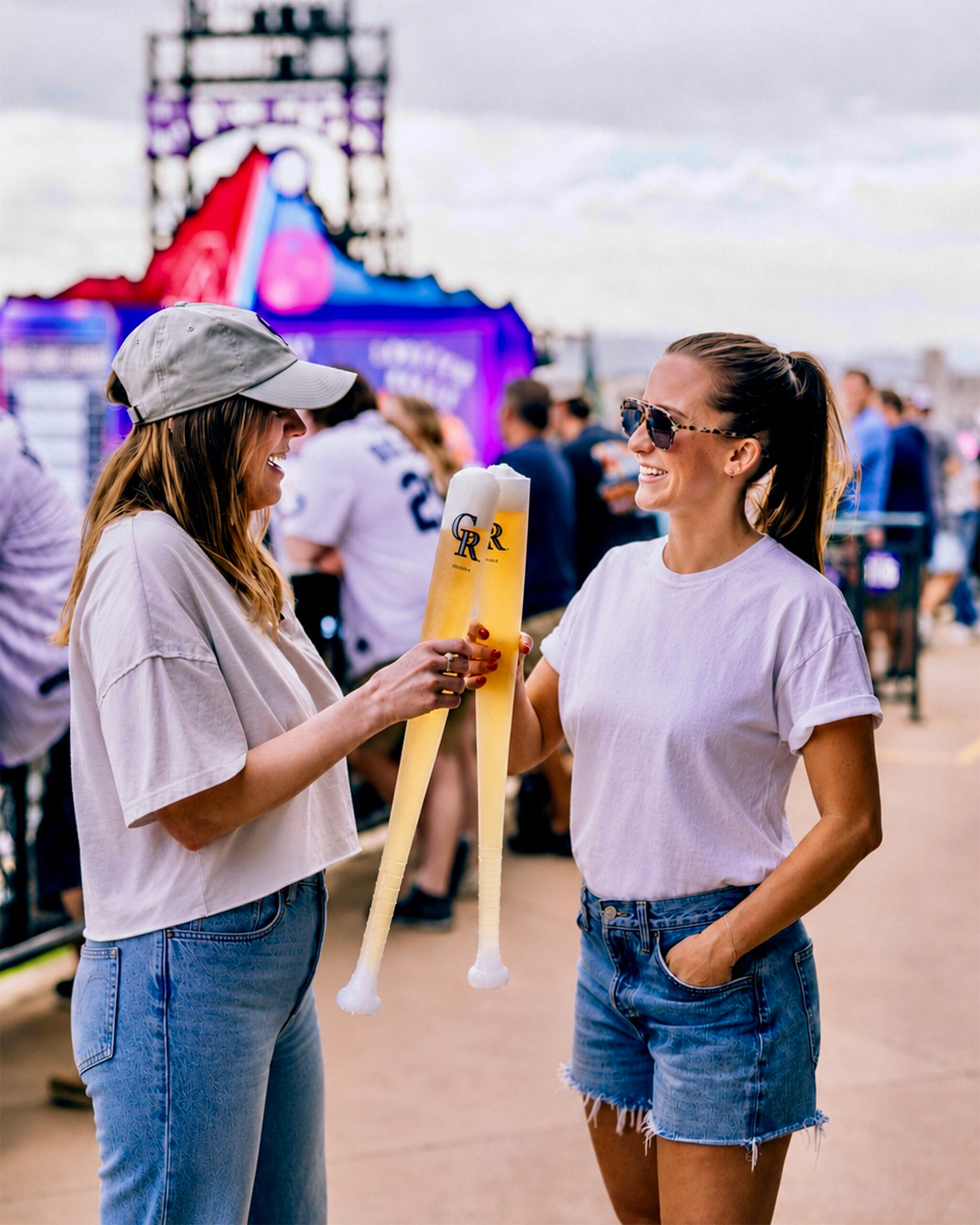
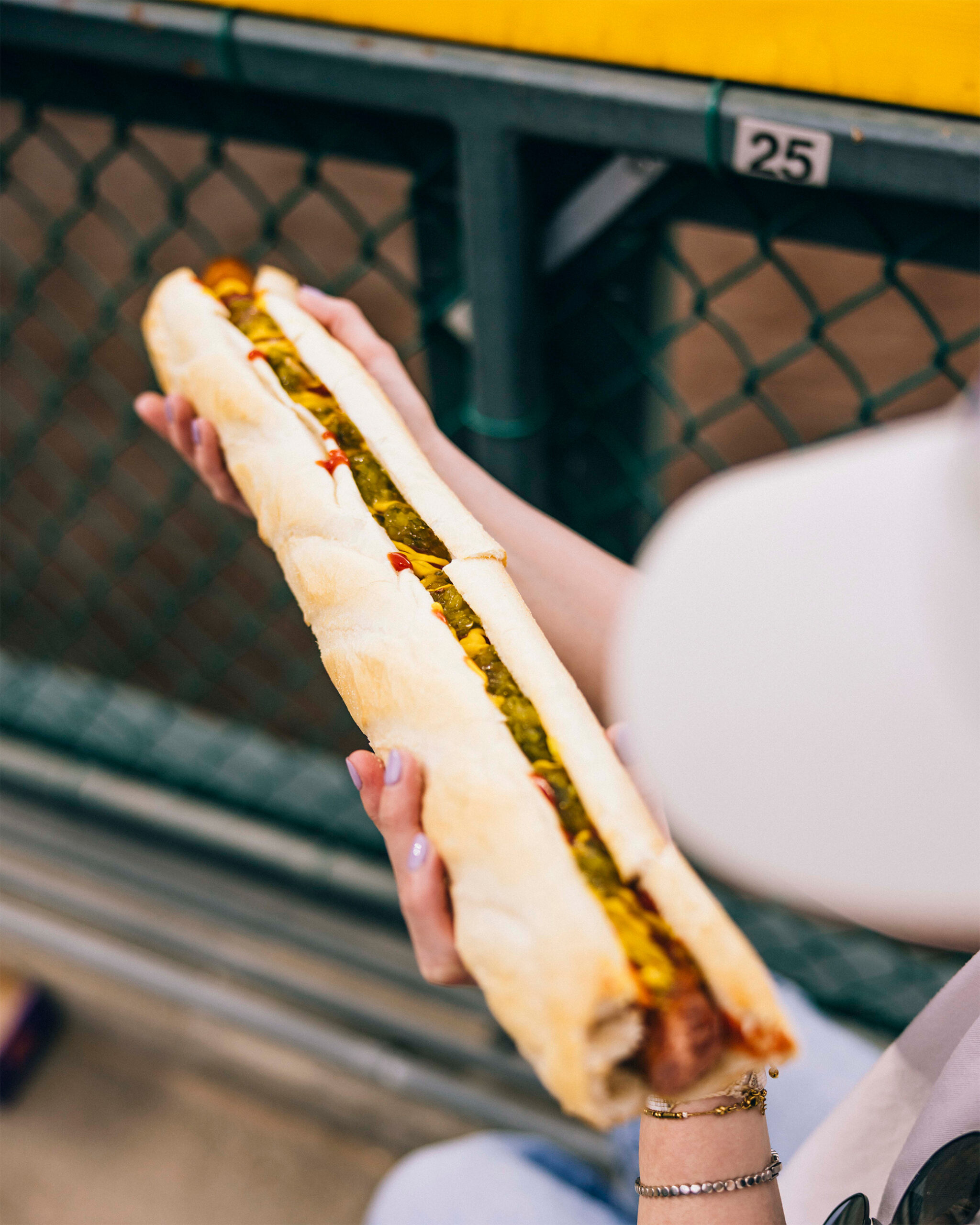
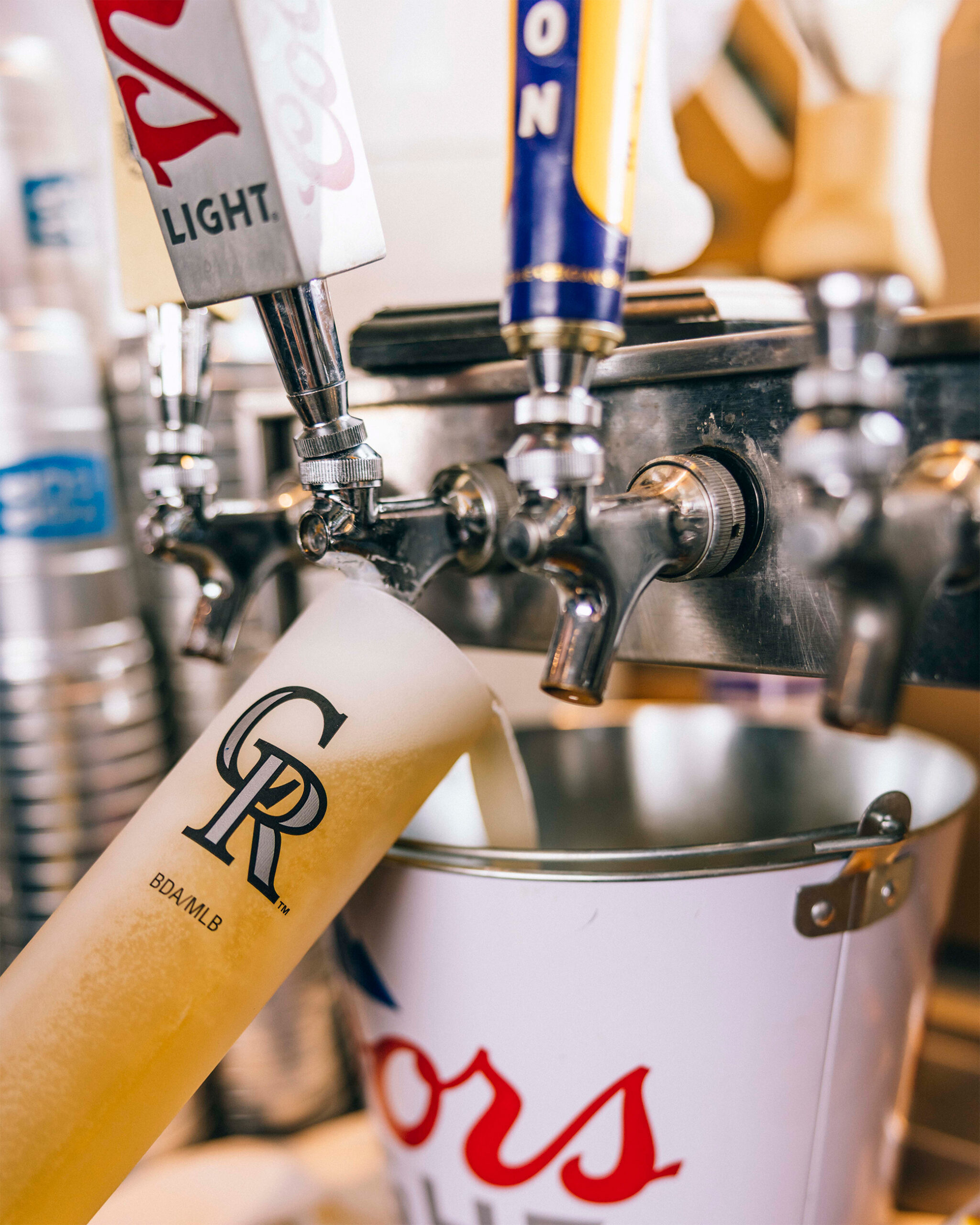
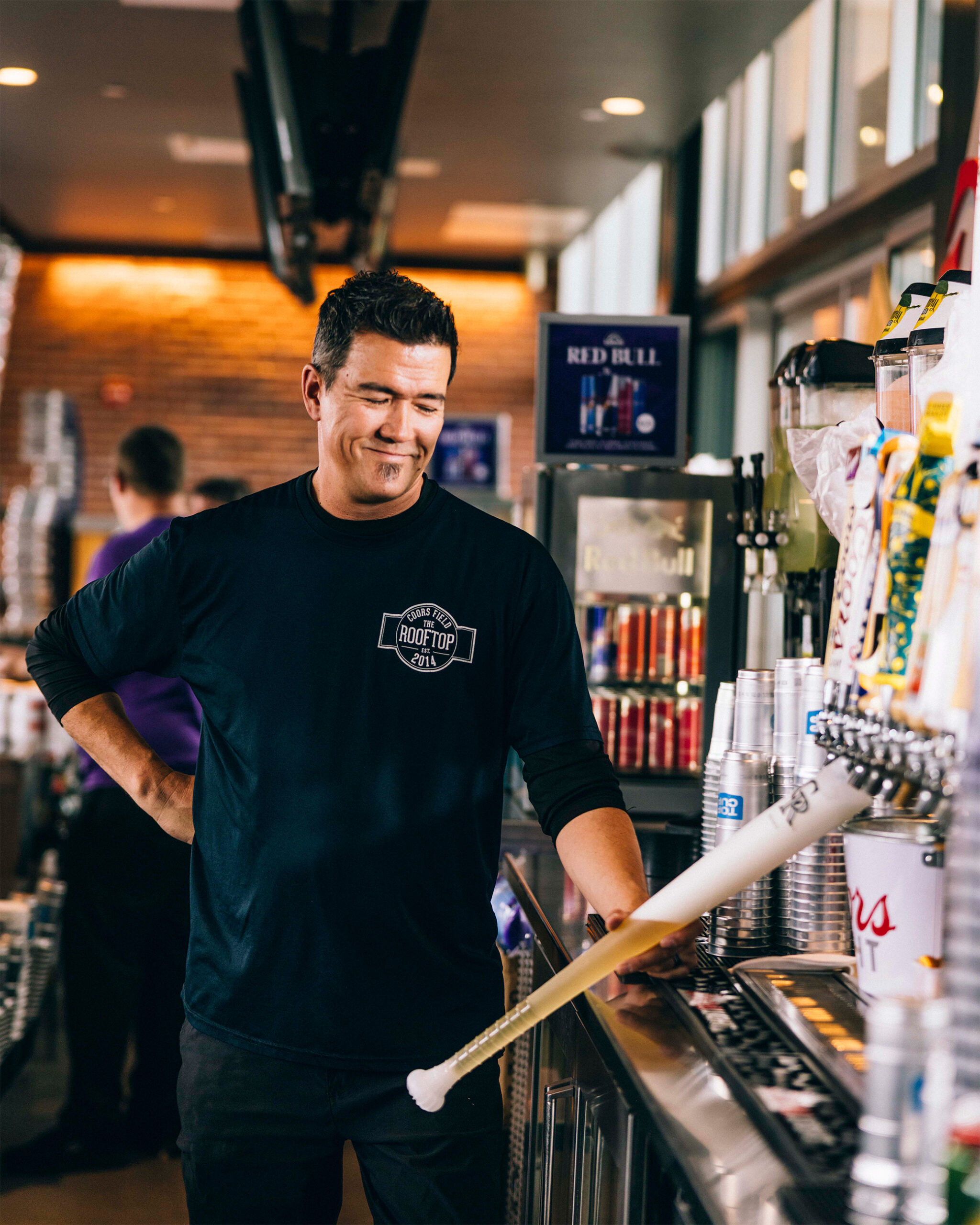
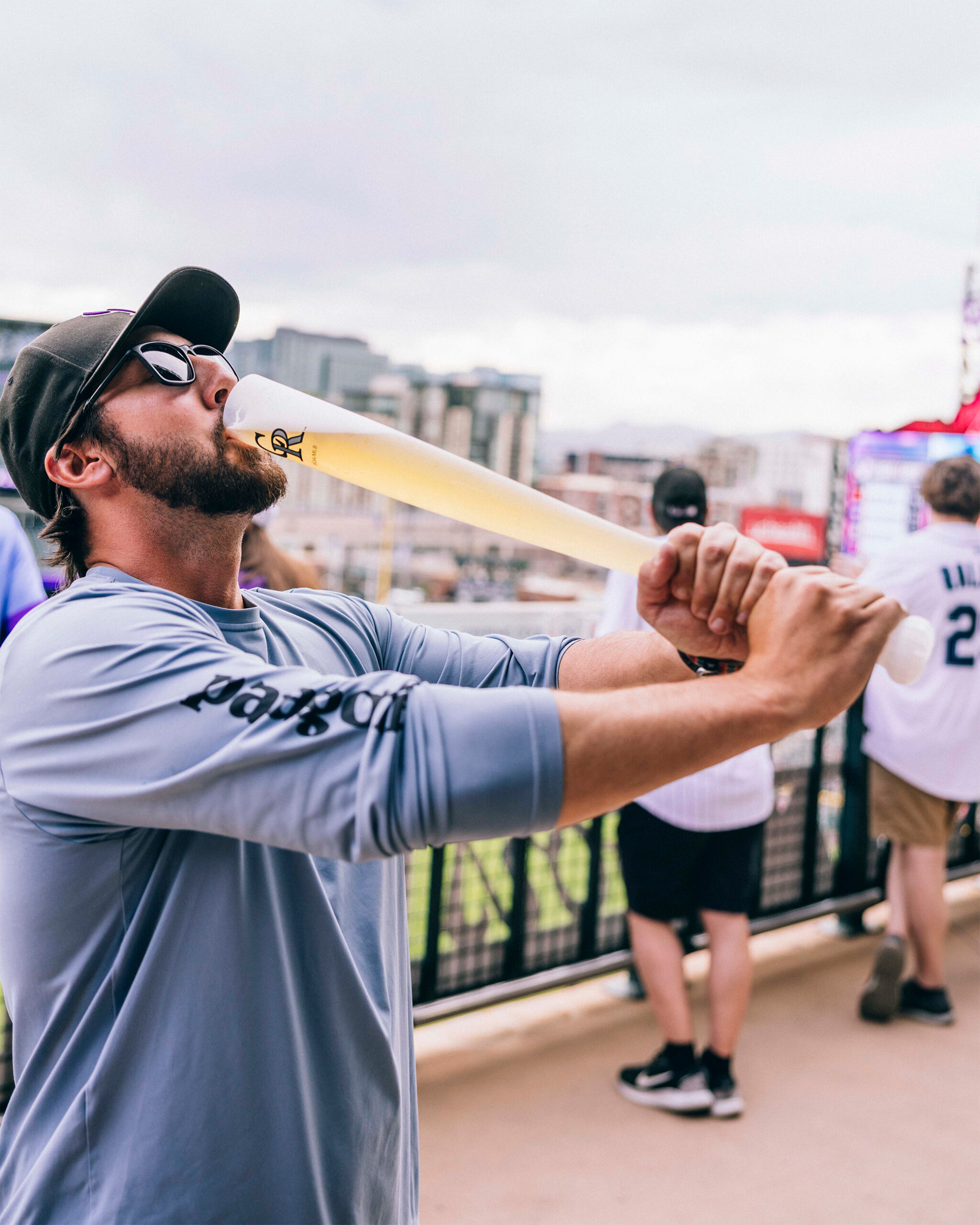
Coors Field has never been shy about going big, and the Glizzilla is proof. This two-foot, one-pound hot dog stuffed into a 19-inch bun is the most unhinged $45 you’ll spend all summer. Find it at Section 157 from 157 Fan Fare, dress it with ketchup and mustard like a normal person, or go full Colorado with mac and cheese for an additional $8.
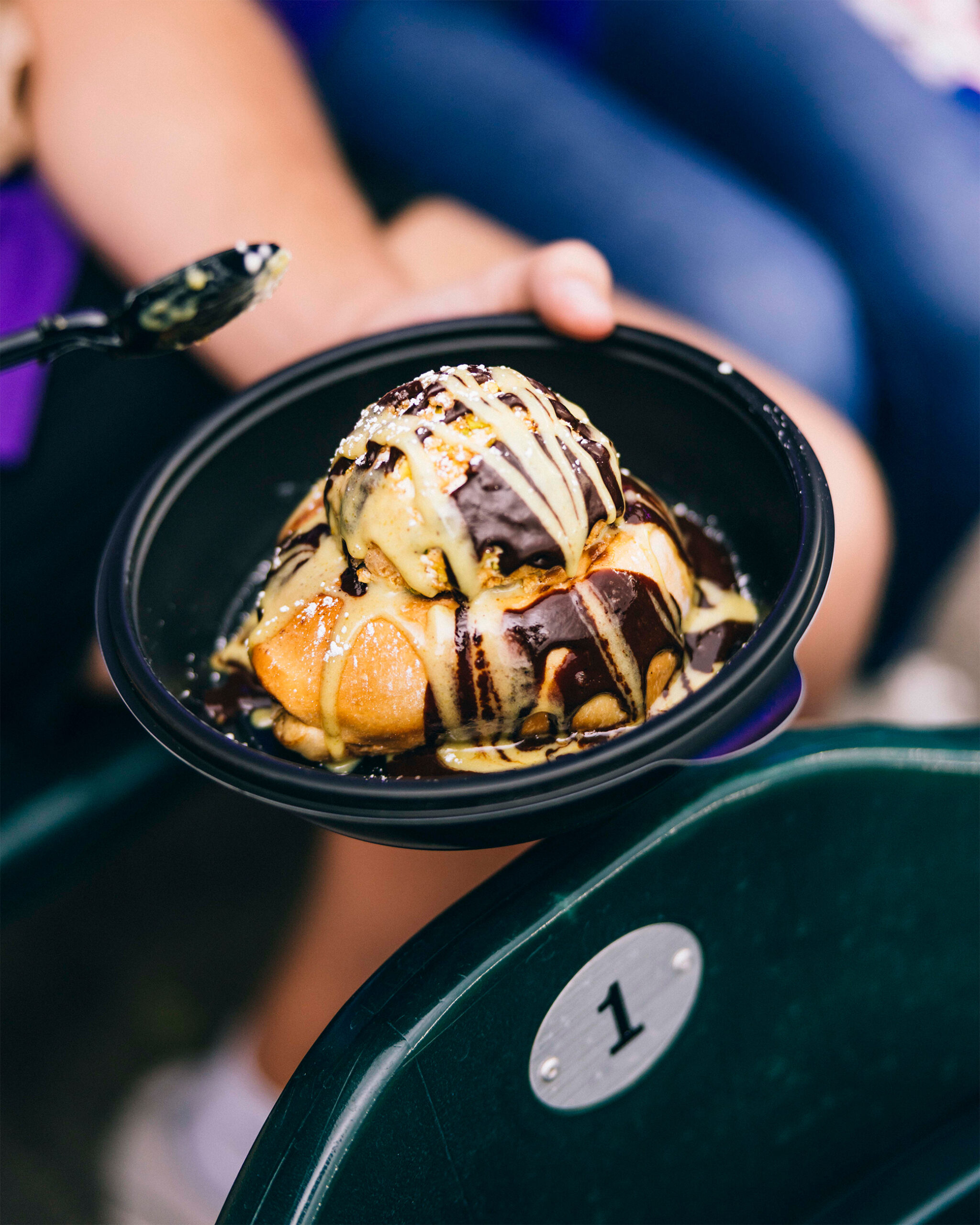
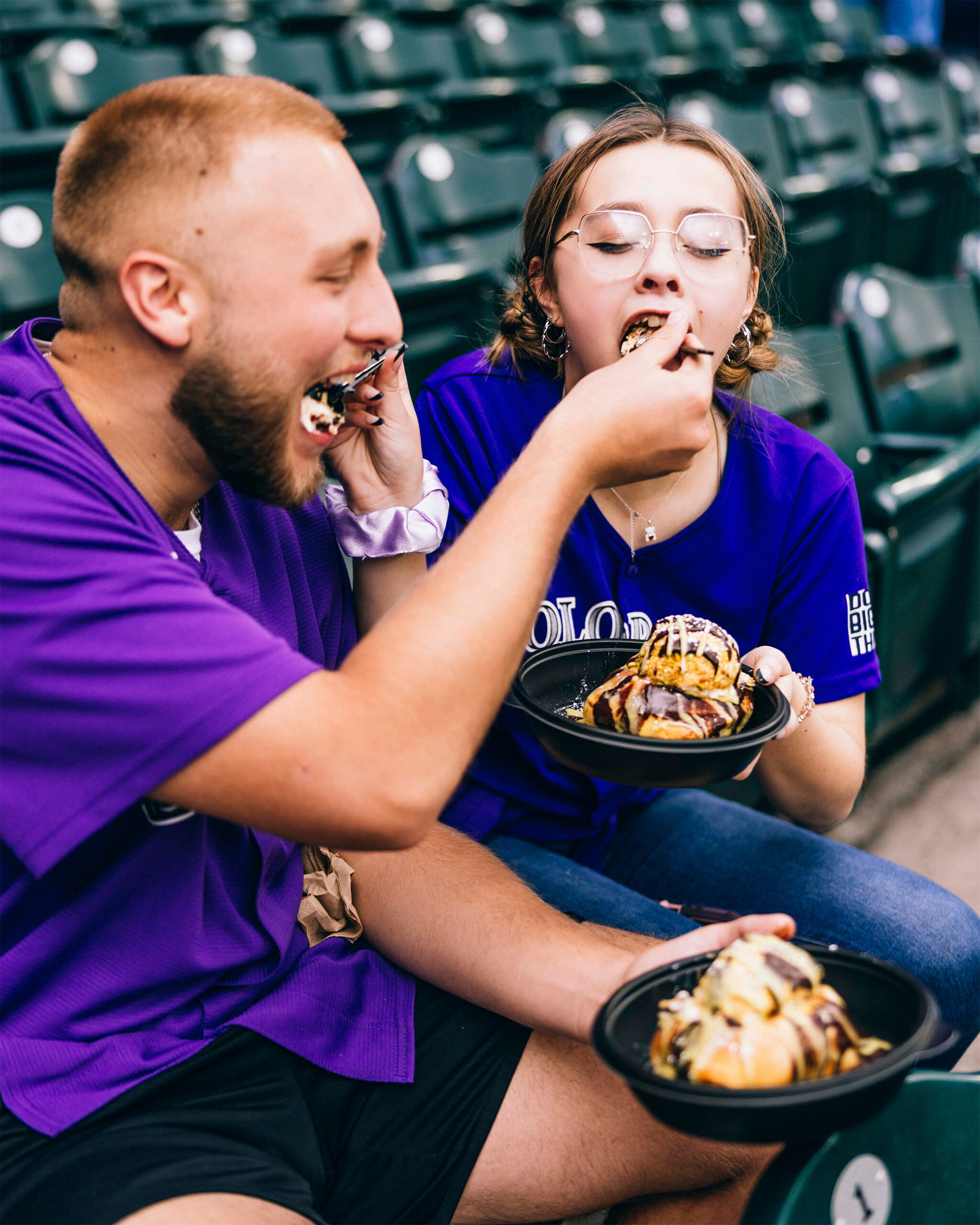
The Dubai Cinnamon Roll Coors Field’s $20 answer to dessert indecision. A jumbo cinnamon roll gets buried under drizzled ganache chocolate and pistachio cream, a scoop of vanilla ice cream rolled in crushed pistachios, and ice crispies and cinnamon topped with powdered sugar. Find it at Section 115 from 115 grill and hope for a calm inning, because this one takes both hands.
Meet Brady O’Neill
Coors Field’s Jacket Guy
Brady O’Neill’s morning looked something like this: get three kids fed and out the door, cover for a nurse wife who worked the night shift, hop in the car to drive in from the suburbs, and arrive at one of the most beloved ballparks in America ready to orchestrate pure joy for tens of thousands of strangers. Just another Tuesday.
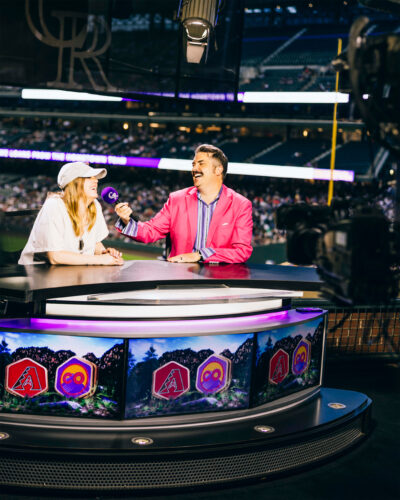
As the assistant director of in-game entertainment and event operations for the Colorado Rockies, Brady is responsible for every moment that isn’t baseball. The anthem singer. The color guard. The bobblehead in your hand. Dinger materializing on the dugout in the seventh inning. The fan losing their mind on the big screen during a between-innings contest. And the host in the eye-watering jacket holding a microphone at the center of all of it. That last one is Brady, too.
The whole thing traces back to a costume. Brady spent his college years as CAM the Ram, Colorado State University’s mascot, after a stint as a character performer at Elitch Gardens, and somewhere in there realized he’d stumbled onto something. “There’s no mascot major in college,” he says, laughing. But what it taught him was irreplaceable. “A lot of it was just taking control of moments. Not everyone can get the crowd going. There are people that try and it doesn’t translate.”
“It is a spotless ballpark. It sounds good and smells good. And those things are really hard to do day in, day out.” -Brady O’Neill
But Brady translates. Perhaps nothing proved that more than the 2021 MLB All-Star Game, which landed in Denver with 13 weeks’ notice as the country was crawling back from the pandemic. Events of that scale typically get two years of runway. His team got a summer. “The hotels downtown were starving for guests. The restaurants needed patrons,” he recalls. “And all of a sudden we were handed an All-Star Game.” He pulled it off. The stadium was packed, the city exhaled, and Brady stood in the middle of it thinking the same thing everyone in the building was feeling. “It felt so normal. It felt really weird, but it felt normal. It felt good.”
The jacket, for the uninitiated, has its own origin story. Early in his hosting tenure, Brady blended into the crowd in an outfit any other game-goer would wear, which is not exactly the look you want when you’re trying to command 50,000 people’s attention. So, for a Purple Monday campaign, he showed up in a head-to-toe purple suit. Owner Dick Monfort spotted him at the staff photo and pointed. “That’s what I was talking about,” he said. From there, he started collecting the loudest, most impossible-to-ignore jackets he could find and rotating them in on big nights. Word spread organically. “People would be talking, like, ‘I was there the other day and there was some guy wearing a real crazy jacket.’” The guy has a name. Now everyone knows it.
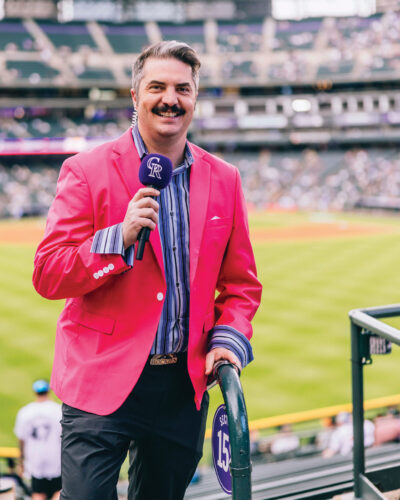
What drives him, underneath the spectacle, is something quieter. He’s candid about the team’s record. He doesn’t oversell it. But he’s quick to share what Coors Field gets right regardless. “Our players always get to play inside a stadium that has tons of people. It is a spotless ballpark. It sounds good and smells good. And those things are really hard to do day in, day out.” He’s traveled to other ballparks, sized them up, brought his family along to compare notes. He keeps coming back to the same conclusion. “Other teams try to capture it all the time. ‘Oh, we’re building this new ballpark downtown; it’s going to breathe life into the area.’” He pauses. “So you want to be Coors Field?”
Around 11 p.m., when the lights are off and the gates are closed, he gets into his car, still wired from the game, and returns to the suburbs. Tomorrow the kids need to be at school, and the jacket needs to be pressed.
The Colorado Connection
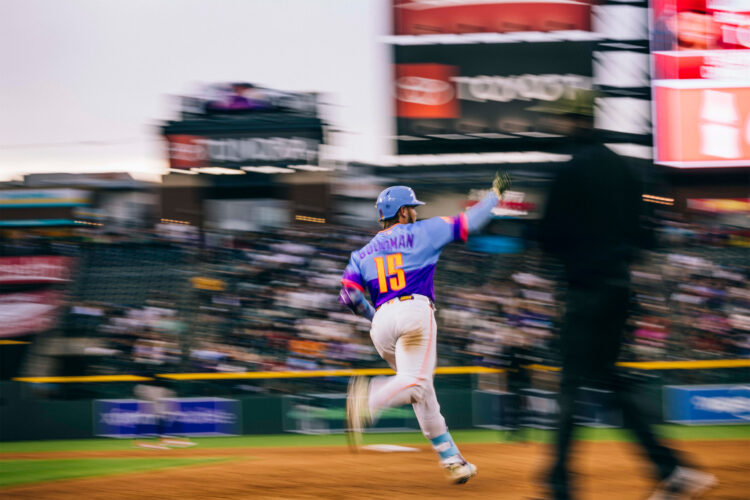
MLB’s City Connect series lets teams trade baseball tradition for something more personal, turning uniforms into wearable love letters to the cities, culture, and local lore that shape their fan bases.
The Rockies’ 2022 original City Connect jerseys pulled directly from one of Colorado’s most recognizable symbols: the green-and-white state license plate. With mountain graphics, retro typography, and deep forest-green tones, the uniforms captured the spirit of road trips: tent packed, windows cracked, and a weekend in the mountains waiting somewhere past the tunnel.
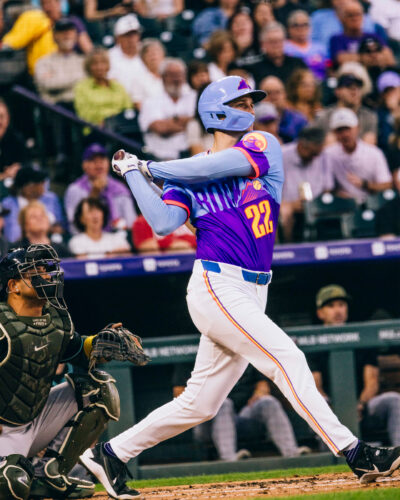
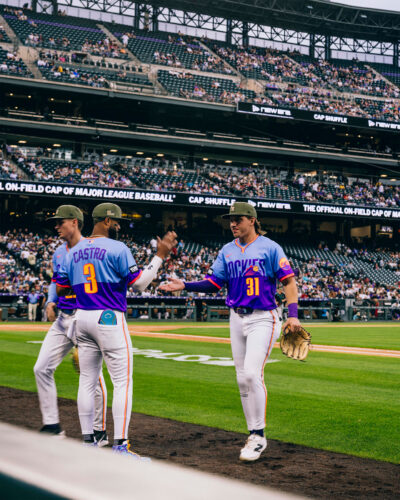
The recently released 2025 City Connect uniforms channel the sky over the Front Range right before the mountains disappear into dusk. Vibrant blues fade into deep purples, while flashes of electric orange and pink pull from the kind of sunset that makes traffic on I-70 feel worth it. The pullover silhouette and textured fabric borrow from vintage ski gear, giving the whole look the energy of a powder day stretched into summer baseball season.
Coors Couture
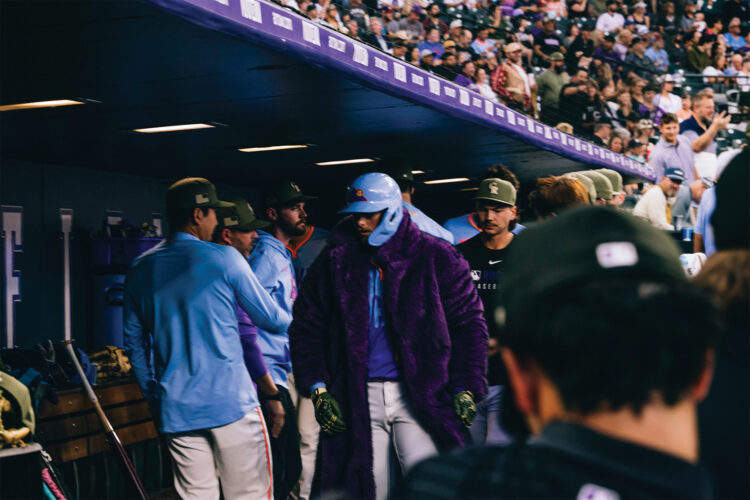
The Rockies’ home run celebration coat is pure Coors Field theater: a sweeping purple faux-fur statement piece that turns every trot around the bases into a dugout runway. After Troy Johnston debuted it in April, the coat quickly became part celebration, part superstition, part purple-powered personality. Flashy and a little ridiculous, it’s exactly the kind of clubhouse character baseball does best.
Meet Bruce Key
Coors Field’s Most Enthusiastic Greeter
Bruce Key will tell you he arrived at Coors Field this morning a full hour before his 11 a.m. call time. Because he does not like to be late. He is 6’7”, he moved to Colorado from Kansas in 1969, he grows tomatoes and peppers in a garden he describes as “not really ever organized,” and he does his own canning. He has insomnia. He watches Alfred Hitchcock Presents reruns at 2 a.m. And every game day, he shows up to sections 133 and 134 ready to shake more hands than, in his words, “a preacher on Sunday.”
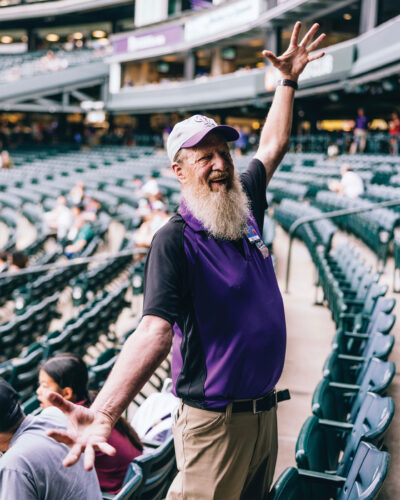
Bruce is an usher. He has been for “three or four years,” after a full career and a retirement that didn’t quite stick. “I decided to retire,” he says. “But I like people. Boom. I’m in.” Simple as that. And while some of us enjoy our jobs, Bruce loves his.
What Bruce actually does in his sections is harder to categorize. Technically, he’s checking tickets, directing lost fans to the bathrooms, holding people at the top of the aisle so nobody walks in front of a pitch. But really, he’s running a show. Every game, he picks a code word, usually a playing card, and gives it to fans the first time they enter. From that point on, say the code instead of your ticket and you’re waved right through. “I need to look at it one time to verify,” he says. “Then you’re good to go the rest of the game.” His personal favorite is the aces. “I’ll take ace in the hole. I’ll take an ace up your sleeve. But if you call me an ace hole, we’re gonna have a problem.”
“I shake more hands than a preacher on Sunday sometimes. Game, whether we win or we lose, it doesn’t matter—I’m giving them that thank you on the way out.”-Bruce Key
He’s been known to use the queen of hearts on days he wants to charm the crowd, tipping his hat and nearly bowing. On tense days or rainy ones when the mood needs softening, he reaches for the ten of hearts. “Start with the word love,” he says. “You can drop them down a notch.” He pauses. “There’s a little thought that goes behind the madness. There’s a little madness behind the thought. I don’t know, one of the two.” Both, probably.
Bruce has had season tickets at Coors Field since opening day in 1995, back when he was just a fan with a notebook full of paper stubs. He never played baseball growing up, raised on a farm in Kansas where cattle and crops took priority. But he always loved the game, and when Major League Baseball came to Denver, he was first in line. “Major League Baseball in Denver,” he says, still savoring it. “That was cool.”
Now he works through health challenges, including a bout of pneumonia and COPD that sidelined him for three weeks last season, and he carries a portable air tank. He’s missed two games this year. Two. “I get a kick out of the people,” he says. “The people I work with are just fantastic.” He pauses, then grins through the phone. “I am going to work every game that I can.”
When the gates close and the last stragglers finally shuffle out, Bruce trudges to his car, wound up and buzzing. He’ll go home, maybe watch some Twilight Zone, mentally run through the next game’s logistics, and wonder which card to pull out. The ballpark will be quiet. The field crew will already be back on the grass. And Bruce will already be thinking about getting there an hour early tomorrow.
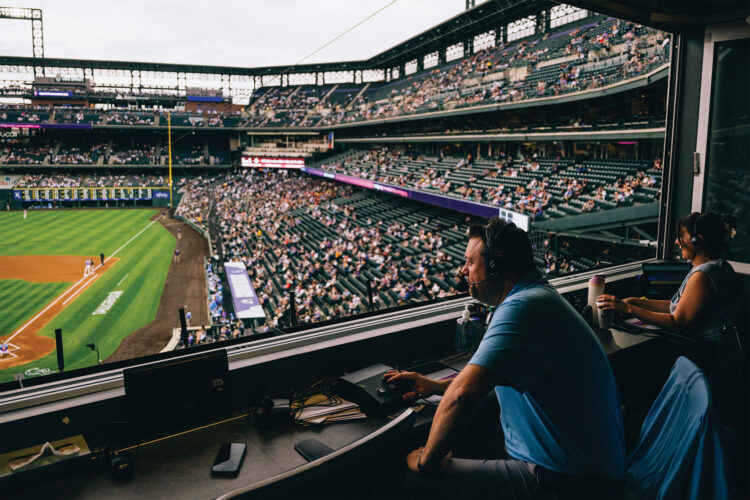
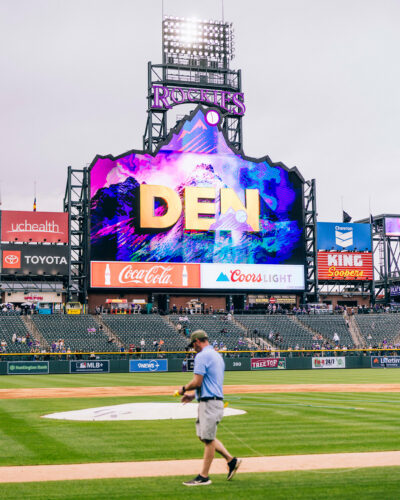
Photo by Aaron Colussi.
For print-exclusive stories, download the digital magazine or pick up a copy from select local King Soopers, Safeway, Tattered Cover, or Barnes & Noble locations.